Bomi Yook
K-DIALECTIC
Résidence
9 mars au 6 avril 2026
VERSION ORIGINALE
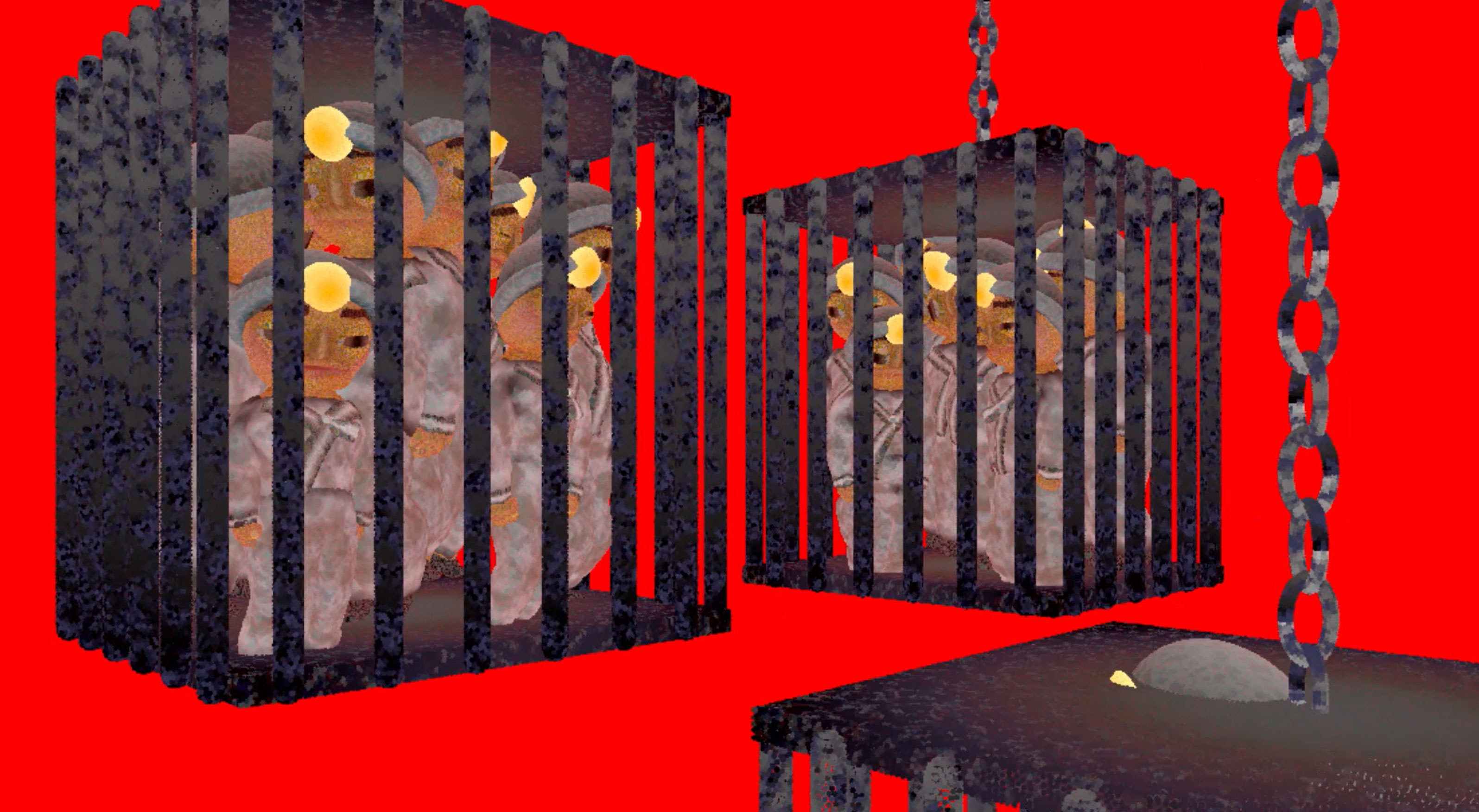
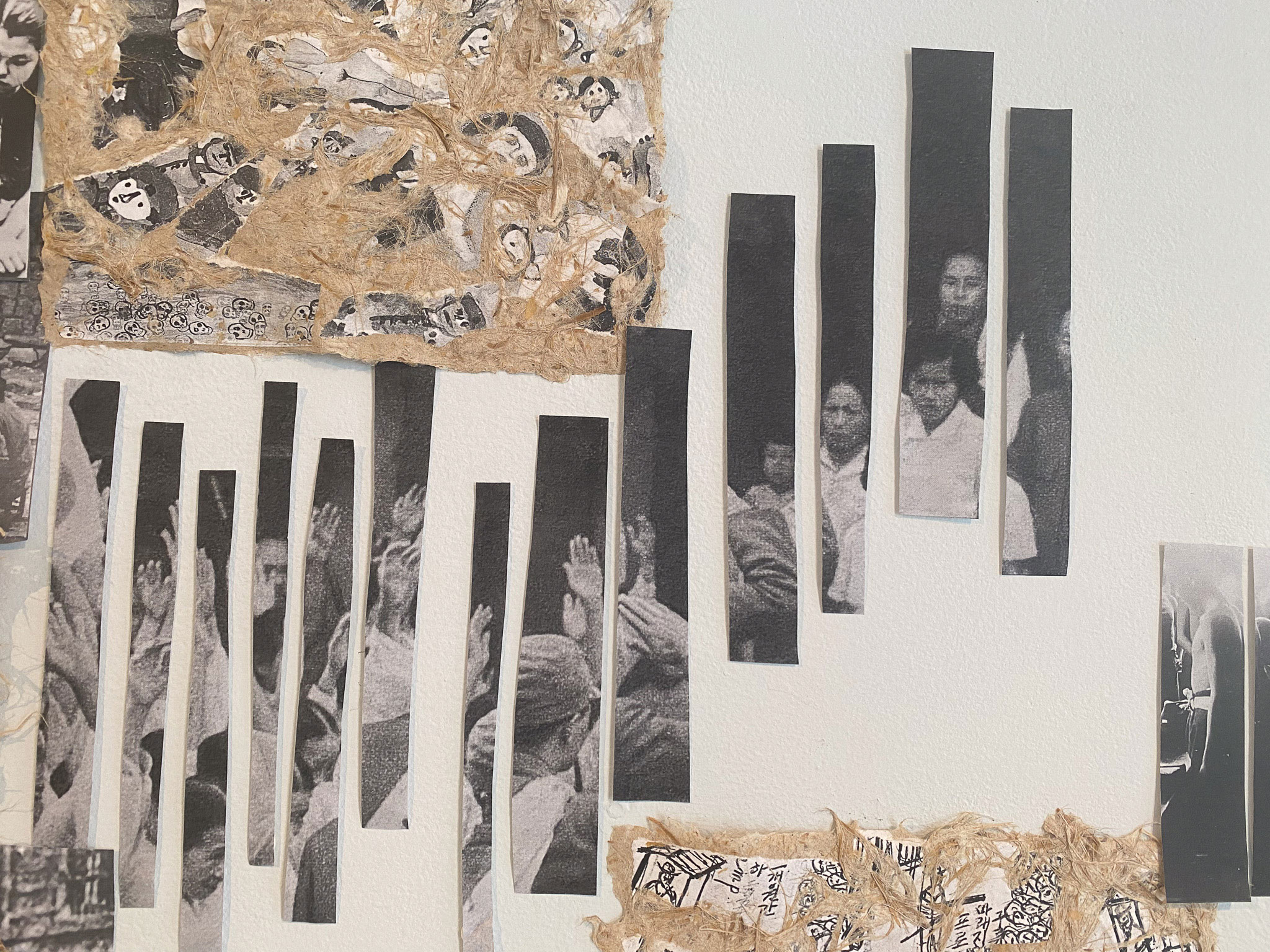
K-DIALECTIC is a multidisciplinary archival project that explores colonial histories of forced labour and wartime sexual violence through a photographic installation and animated documentary fantasy. What began as Bomi attempting to reconstruct fragments her grandfather’s missing biography as a forced labourer in a Japanese mining camp has since evolved into a broader psycho-historical inquiry into how violence persists as traces within cultural memory, shaping identity through suppression and the return of the memory of the oppressed.
The project is a part of a larger trilogy work tracing key historical ruptures in modern Korean history: Japanese colonialism (1910-1945) in K-DIALECTIC; the Korean War (1950-1953) in K-PARADOX; and the rise of industrial capitalism (1965-1980) in K-CAPITAL. Conceived as a psycho-historical inquiry, the series trace the rise and fall of ideologies that shaped collective identity and examines the violences they inflicted—violences that continue to haunt the present. The trilogy envisions a paradoxical economy of power unfolding across history, where the suffering of the oppressed resists closure and returns as ruptures within collective memory, demanding reckoning within present and ongoing structures of power. The series approaches artistic practice as a form of critical historiography, seeking to give visual and spatial form to historical absences while exploring how the past in never truly left behind, but persists within the present as its hidden ground.
BIO
Bomi Yook is a media artist based in Calgary, working with immersive media, experimental animation, and video performance. Her work explores hybridity within identity, cultural landscapes, and knowledge systems, often drawing on the collective memory of the Korean diaspora, with its complex ties to immigration and colonization. Navigating the nuances of belonging to multiple cultural frameworks, Yook’s practice reflects on the paradoxical nature of identity, emphasizing its incompleteness, incongruity, and intersubjectivity. Exploring the Ecologies of Trace—of the Other and Otherness within the self—her works reveal identity and ideologies as inter-constitutive, seeing the world as a paradoxical blend of contexts rather than distinct, isolated definitions.